When Shared Moments Fracture: Why “We” Still Matters
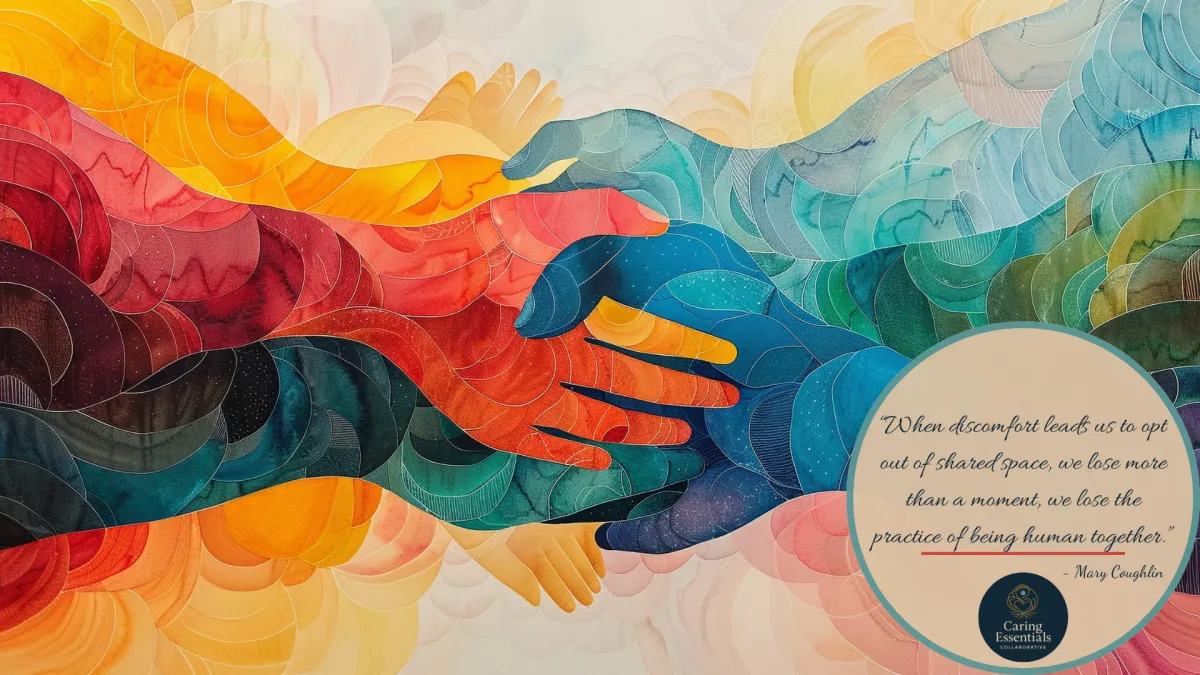
“When discomfort leads us to opt out of shared space, we lose more than a moment, we lose the practice of being human together.” - Mary Coughlin
Refusing the Pull to Fragment: A Reflection on “Our We”
There have been plenty of Super Bowl halftime shows over the years that weren’t my cup of tea.
When that happens, I do what most people do: I grab another beer, maybe a slice of pie, step away for a few minutes and then come back to why we’re together in the first place. To watch the game. To share the moment. To be part of something collective.
That’s what has always made the Super Bowl different from any other form of entertainment. It’s not about loving every performance. It’s about being present for a shared national event, one of the few we still have.
What gave me pause this year wasn’t preference. Preferences are human. They’re expected. What felt different and heavier was the move toward parallel halftime experiences.
At first glance, that might seem harmless. After all, we can watch whatever music or show we like any time of day, any day of the week. But the Super Bowl halftime show isn’t just another show. It’s part of a collective ritual. And when we respond to discomfort in shared space by opting out and recreating something separate, something essential begins to shift.
Preference vs. Participation
In a free society, we absolutely have the right to our preferences. We don’t have to love every performance, every song, every expression of culture that appears on a national stage.
But there’s a difference between preference and participation.
Participation asks something more of us. It asks us to remain present even when a shared moment doesn’t mirror our own culture, comfort, or expectations.
The Super Bowl has never belonged to one group alone. Its power has always come from being collective. When we fragment that space into “ours” and “theirs,” something essential is lost.
Parallel Experiences and the Cost of Separation
Parallel experiences can feel soothing in moments of discomfort. From a trauma-informed lens, that makes sense. When the unfamiliar activates us, our nervous systems often seek safety through retreat and sameness.
But when parallel experiences become the answer to cultural discomfort, they quietly reinforce silos. They teach us, over time, that:
shared spaces are optional
collective moments are negotiable
belonging depends on resemblance
This is not about accusing individuals of ill intent. It’s about noticing patterns and their impact. Disconnection rarely arrives all at once. It arrives gently wrapped in language about choice, comfort, and freedom until we look up and realize how little we still hold in common.
And the more disconnected we become, the less collective power we have.
A fragmented “we” is easier to manage.
A disconnected public is easier to manipulate.
A people who no longer share space are less likely to recognize their shared interests, shared dignity, and shared humanity.
Over time, “we” stops feeling like a lived truth and starts to sound like a sentimental idea.
Staying in the Stretch
From the perspective of Caring Science and trauma-informed care, healing doesn’t come from withdrawal. It comes from staying in relationship with ourselves and with one another especially when it’s uncomfortable.
Being American has never meant uniformity. But it has always required a willingness to share space. To stay in the stretch. To remain curious. To witness expressions of culture that are not our own without needing to replace them with something more familiar.
Refusing to be manipulated doesn’t always look like protest. Sometimes it looks like staying.
Staying in the room.
Staying with the discomfort.
Staying connected to one another.
Because shared humanity isn’t sustained by agreement, it’s sustained by proximity.
A Question Worth Holding
We don’t need to resolve this conversation. But we do need to sit with it. What do we lose when we stop protecting shared civic moments? What happens to democracy, community, and belonging when we repeatedly choose separation over presence? And what would it look like to treat discomfort not as something to escape, but as an invitation to grow?
In a world already fractured by fear and fatigue, preserving spaces of “we” may be one of the most radical acts of care we have left. Not because it’s easy. But because it matters.
Refuse Manipulation While Honoring Choice
At the end of the day, watch what you want. That is your God-given right. Step away. Grab a drink. Change the channel. We’ve always had that freedom, and it matters. But alongside that freedom, I think there’s an invitation to stay awake.
To be wary of the ways our choices can be shaped subtly and persistently toward separation rather than connection. To notice when “alternatives” are less about enjoyment and more about quietly unraveling the shared spaces that hold us together.
Because the erosion of shared humanity rarely announces itself. It doesn’t arrive with force. It arrives wrapped in comfort, familiarity, and the promise of choice. And over time, those small exits add up.
So yes watch what you want. But also ask what’s being pulled apart in the process. Ask who benefits when we stop holding things in common. Ask what happens to “we” when shared moments become optional.
Refusing to be manipulated doesn’t require outrage. Sometimes it simply requires choosing to stay. To stay present, connected and invested in the shared spaces where our humanity is still practiced.
We don’t protect our shared humanity by opting out. We protect it by choosing, again and again, to stay.
Hugs and hope, Mary