The Quiet Work of Discernment | Living the Wisdom We Already Know
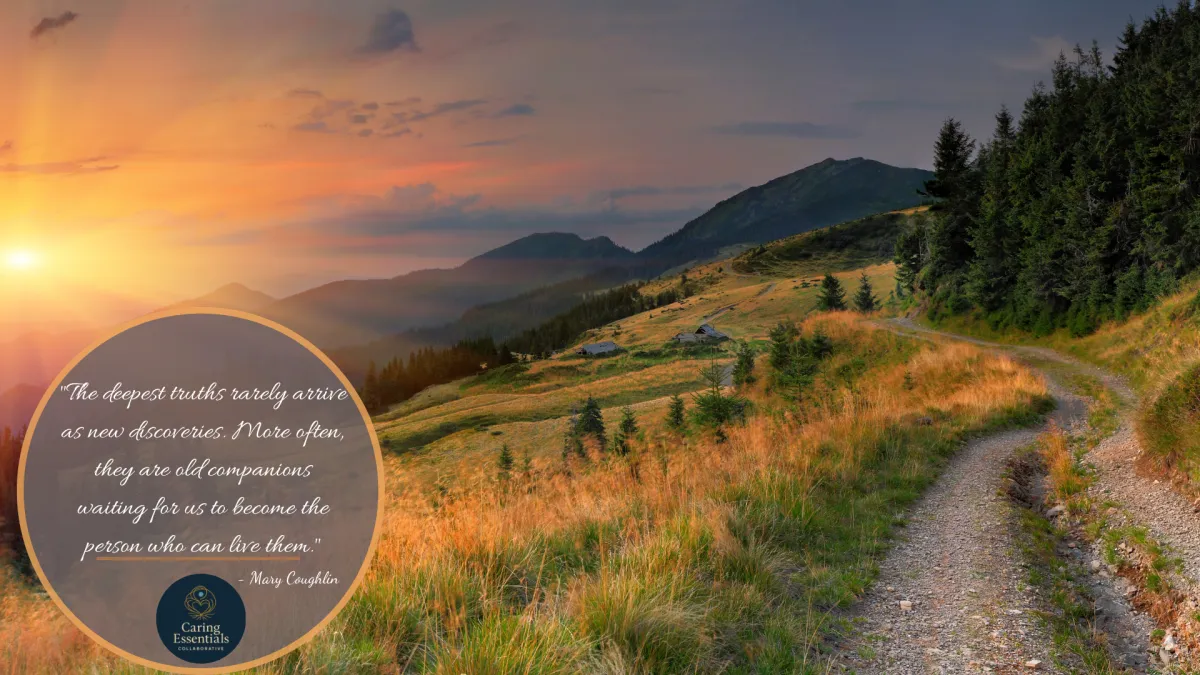
"The deepest truths rarely arrive as new discoveries. More often, they are old companions waiting for us to become the person who can live them." - Mary Coughlin
A few days ago I went to the movies with my favorite protest buddy, Carol. We watched The Death of Robin Hood. When it ended, I wasn't sure what to make of it. It lingered with me for several days before I realized what had unsettled me.
It wasn't really about Robin Hood.
It was about being human.
I generally love Robin Hood movies. You know the story. The ruggedly handsome hero robs from the rich, gives to the poor, unites the people, empowers the oppressed, and of course gets the girl. In my version, they all live happily ever after.
That was not this film.
It occurred to me that maybe we've become so accustomed to tidy endings that we've forgotten how to live with complicated stories. We've also become remarkably skilled at sorting life into neat categories. Hero or villain. Right or wrong. Success or failure. We reach for certainty because certainty feels reassuring.
Life, however, doesn't seem to work that way.
Nature certainly doesn't. It doesn't separate growth from decay. The forest needs both. The tide comes in and goes out. Day gives way to night, and winter eventually softens into spring. Nature isn't trying to resolve these apparent opposites. It simply holds them as part of the whole.
We humans seem less comfortable with that. We want clarity. We want to know who is right and who is wrong. We want clean endings and clear answers. Yet life keeps refusing to cooperate.
The more I sat with the film, the more I realized that it wasn't asking me to choose a side. It was inviting me to sit with the discomfort of complexity. Somewhere in that discomfort another realization quietly emerged.
I've understood the idea of duality for years. Intellectually, it made perfect sense. I've spoken about it, written about it, and woven it into my work. But understanding something and embodying it are not the same.
There comes a moment when an idea stops living in your head and begins living through you. You don't notice it happening at first. Then one day you catch yourself responding differently — not because you've remembered a principle, but because the principle has quietly become part of who you are.
Maybe that's what wisdom feels like.
As I continued reflecting, another distinction became clearer. Not every tension asks the same thing of us.
Some tensions are woven into the fabric of being human. Love and loss. Joy and grief. Strength and vulnerability. Certainty and doubt. They are not problems to solve but realities to inhabit. They ask something of us — not resignation, but humility. Not answers, but presence.
Injustice is different.
Injustice is not another paradox to accept. It is a rupture in relationship. It asks us to pay attention, to speak, to act, and to refuse indifference. It calls us toward courage, but courage without compassion quickly becomes self-righteousness. Compassion without courage becomes complacency.
Perhaps wisdom lies in learning the difference.
As I thought about that, I realized this thread has quietly woven itself through much of my life's work. Whether writing about trauma-informed developmental care, Caring Science, advocacy, or relationships, I've been circling the same truth from different directions.
Healing has never been about perfection. It has never been about getting everything right. It has always been about remaining present in the midst of complexity — open enough to be changed by what we encounter and courageous enough to act when love requires it.
That feels true far beyond healthcare.
Our world is asking us to hold things that don't fit neatly into categories. To grieve without surrendering hope. To confront injustice without losing our humanity. To resist indifference without becoming consumed by anger. These are not problems we solve once and for all. They are capacities we cultivate over a lifetime.
Looking back, I can also see another quiet shift taking place in me.
For many years I thought a great deal about legacy. I wanted my work to matter. I wanted to contribute something meaningful that might outlive me. I still care deeply about contributing, but lately I've found myself thinking less about what I will leave behind and more about how I am showing up today.
Legacy belongs to time.
Presence belongs to this moment.
I wonder if wisdom isn't something we acquire at all. I wonder if it has been quietly waiting beneath the striving, beneath the certainty, beneath all the instructions about who we're supposed to become. Maybe the work isn't to know more. Maybe it's to trust what has been slowly taking root within us all along.
The deepest truths may not arrive as new discoveries. More often, they are old companions waiting for us to become the person who can finally live them.
Take care and care well, Mary