Courage Is Not Partisan. It Is Protective.
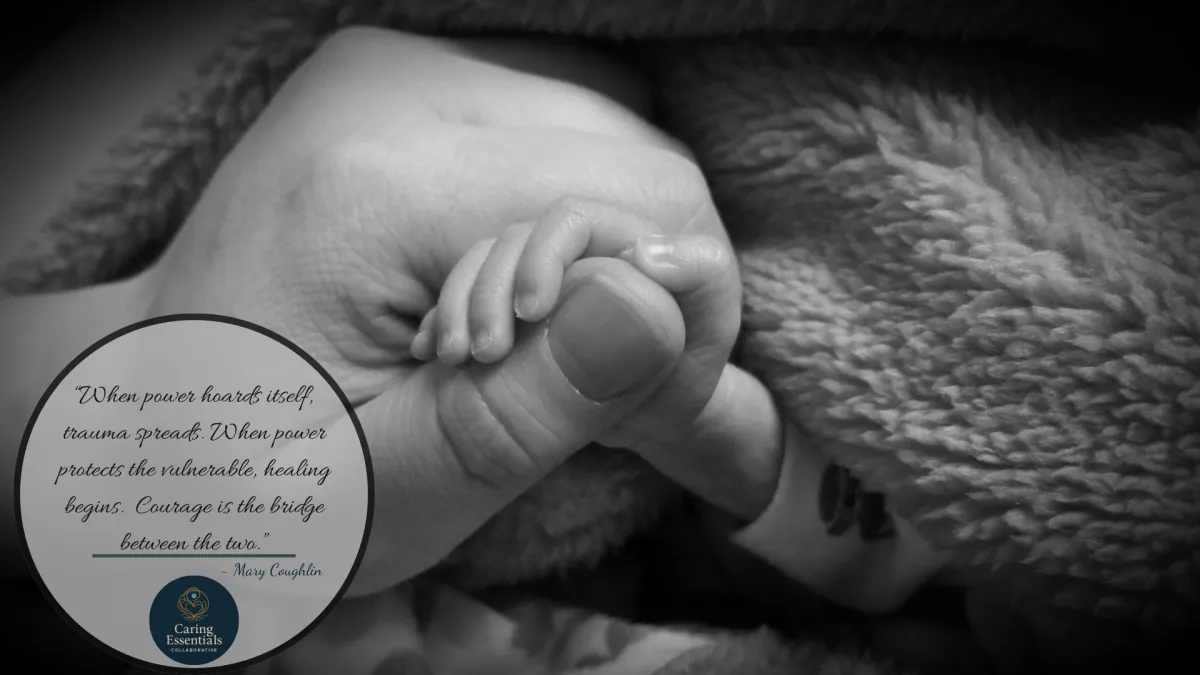
“When power hoards itself, trauma spreads. When power protects the vulnerable, healing begins. Courage is the bridge between the two.” — Mary Coughlin
This week, I listened to Senator Bernie Sanders speak about oligarchy, democracy, and the courage needed to confront concentrated power.
What struck me wasn’t the politics. It was the moral architecture.
He spoke about billionaires buying elections, about systems that divide us, about the need for leaders bold enough to protect working families and defend democracy.
And I thought: 'This is the same conversation we have in the NICU. Different scale. Same question.'
Who holds power? And how is that power being used?
In trauma-informed developmental care, we understand something essential: Power is never neutral.
In a neonatal intensive care unit, power can silence a parent’s voice.
It can mute a nurse’s moral distress.
It can prioritize throughput over presence.
It can reduce humanity to metrics.
Or —
Power can protect the vulnerable.
It can amplify parent expertise.
It can create psychological safety.
It can restore dignity.
The same is true in a democracy.
When wealth concentrates and voice narrows, people feel it in their bodies. Division escalates. Fear increases. Trust erodes. Collective dysregulation follows. We call it polarization. But trauma-informed science calls it threat response.
The B.U.F.F.E.R. framework teaches that human systems thrive when people experience:
Belonging
Understanding
Forgiveness
Frameworks
Equanimity
Respect
Remove those conditions — from a baby, a family, a clinician, or a citizen — and dysregulation spreads.
This is why advocacy is not an optional add-on to trauma-informed care. It is a professional responsibility.
Not partisan advocacy. Principled advocacy.
Advocacy that asks:
Are we protecting the most vulnerable?
Are we widening belonging?
Are we structuring systems around dignity?
Are we regulating fear rather than exploiting it?
Courage, in this context, is not aggression, it is regulated boldness; it is the capacity to stay grounded enough to confront concentrated power without becoming dehumanizing ourselves.
That is as true at the bedside as it is in public life.
When I hear calls to confront oligarchy, what I hear beneath the rhetoric is this:
Protect the vulnerable.
Defend belonging.
Redistribute voice.
Refuse dehumanization.
That is trauma-informed leadership.
In healthcare.
In education.
In governance.
Courage is not partisan. It is protective. And in this moment — wherever you stand politically — the question remains: How will you use the power you hold?
Take care and care well, Mary