The Cost of Searching for a Future: Why Presence Matters in Trauma-Informed Care
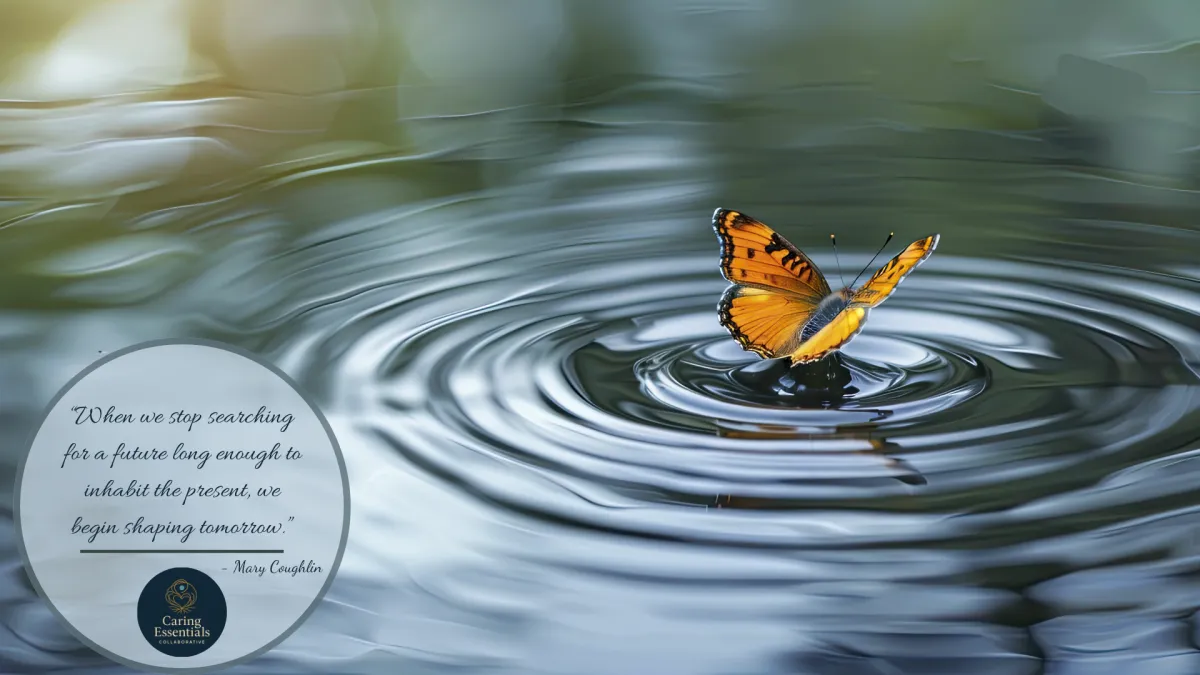
“When we stop searching for a future long enough to inhabit the present, we begin shaping tomorrow.” - Mary Coughlin
The Cost of Searching for a Future: Why Presence Matters in Trauma-Informed Care
This week I am writing to you from Ireland.
I am here for the Attuned in Practice conference and a series of workshops taking place across the country—from Cork to Dublin and wrapping up in Derry. The theme of the gathering is “Weaving Presence, Humanity, and Reflection into Care - Holding the Whole” and the conversations have been nothing short of profound.
Across rooms filled with clinicians, educators, and caregivers, we have been exploring the power of presence and the many moving parts of trauma-informed developmental care. We have spoken about safety, connection, regulation, and the relational conditions that allow babies, families, and caregivers to flourish. The B.U.F.F.E.R. framework has naturally woven its way into these conversations as a reminder that belonging, understanding, forgiveness, frameworks, equanimity, and respect are not abstract ideals but living practices.
And yet, in the midst of these rich conversations, a phrase a dear friend of mine often uses has been echoing in my mind.
He talks about searching for a future.
On the surface, it sounds hopeful.
But the more I have reflected on it this week, the more I have come to wonder whether searching for a future can sometimes come at the expense of the present.
And the present is where life actually happens.
What Happens in the Present
When we talk about presence, it can sound soft. Gentle. Almost passive. But presence is anything but passive. Presence is where we notice.
It is where we begin to see things clearly, the small signals that tell us whether someone is safe or struggling, connected or alone.
In the NICU, presence allows a clinician to notice the subtle cues of a baby’s nervous system: a shift in breathing, a tightening (or collapse) in muscle tone, a change in color that signals stress long before the monitor alarms.
Presence allows us to notice the parent who has stopped asking questions because they feel intimidated. The colleague whose exhaustion is beginning to show up as silence or irritability. The family who cannot come to the bedside because something beyond the hospital walls is keeping them away.
Presence is the moment when awareness begins, and awareness is where change begins.
But presence requires something modern systems rarely allow...space to notice.
The Systems That Pull Us Away
Many of the systems we work within are built around the future.
Metrics.
Benchmarks.
Productivity targets.
Efficiency dashboards.
These tools are often designed with good intentions to improve outcomes and reduce errors. But they also orient our attention toward what comes next, often pulling us away from what is unfolding right in front of us.
When our attention is constantly pulled toward the next task, the next metric, the next initiative, we can become preoccupied with chasing a better future. And in that chase, something subtle can happen.
We stop noticing. We stop questioning. We stop responding to what the present moment is revealing. Not because we do not care but because we have been conditioned to move faster than reflection allows.
The Power of Noticing
The present moment holds information no dashboard can capture. Presence is where we see the gaps between policy and reality; where we recognize when families are struggling to access care; where we feel the quiet signals of moral distress in ourselves and our colleagues.
Presence allows us to ask the questions systems sometimes overlook:
Who is missing from this room?
Whose voice has not been heard?
What is happening here that the numbers cannot tell us?
These questions matter because the future is not shaped only by the plans we make. It is shaped by the actions we take when we notice what is happening now.
The Caring Moment
Nursing theorist Jean Watson speaks of something she calls the caring moment. It is the moment when two human beings come together in a shared field of awareness. Not as roles. Not as diagnoses or tasks. But as people.
In that moment, something becomes possible that cannot be measured on a dashboard or captured in a productivity report. The caring moment is the space where presence meets relationship.
It might be the quiet moment when a clinician places their hands around a fragile infant and pauses long enough for the baby’s nervous system to settle.
It might be the moment a parent whispers their child’s name through tears and exhaustion.
It might be the moment when one colleague truly listens to another.
These moments are small. Almost invisible in the pace of modern healthcare. But they are also powerful, because in the caring moment, something shifts. Fear softens. Isolation loosens. Connection begins and connection is one of the most powerful buffers we have against trauma.
Presence Shapes the Future
Here is the paradox. We are often encouraged to search for a better future. But the future is not built somewhere ahead of us. It is built in the caring moments that happen right now.
Every time we pause long enough to notice.
Every time we choose connection over efficiency.
Every time we recognize the humanity of the person in front of us.
These moments may seem small, but they ripple outward.
They shape the experience of a baby in the NICU.
They shape the confidence of a parent learning to care for their child.
They shape the culture of the teams we work within.
And over time, they shape the future itself.
A Reflection from Ireland
As I move through these days in Ireland sharing stories, listening to others, and sitting in rooms where people are willing to pause together I am reminded that presence is not something we master once and for all. It is something we practice. Over and over again.
In the NICU.
In our conversations.
In our homes.
In the way we show up for ourselves and one another.
The future we long for is not waiting somewhere ahead of us. It is being woven, quietly and steadily, in the caring moments we choose to inhabit today. And perhaps that is the real invitation: not simply to search for a future but to become fully present to the life unfolding in front of us, and in doing so, to help shape a future worthy of the humanity we share.
Take care and care well, Mary