Love as a Systemic Force: Healing Society Through the NICU
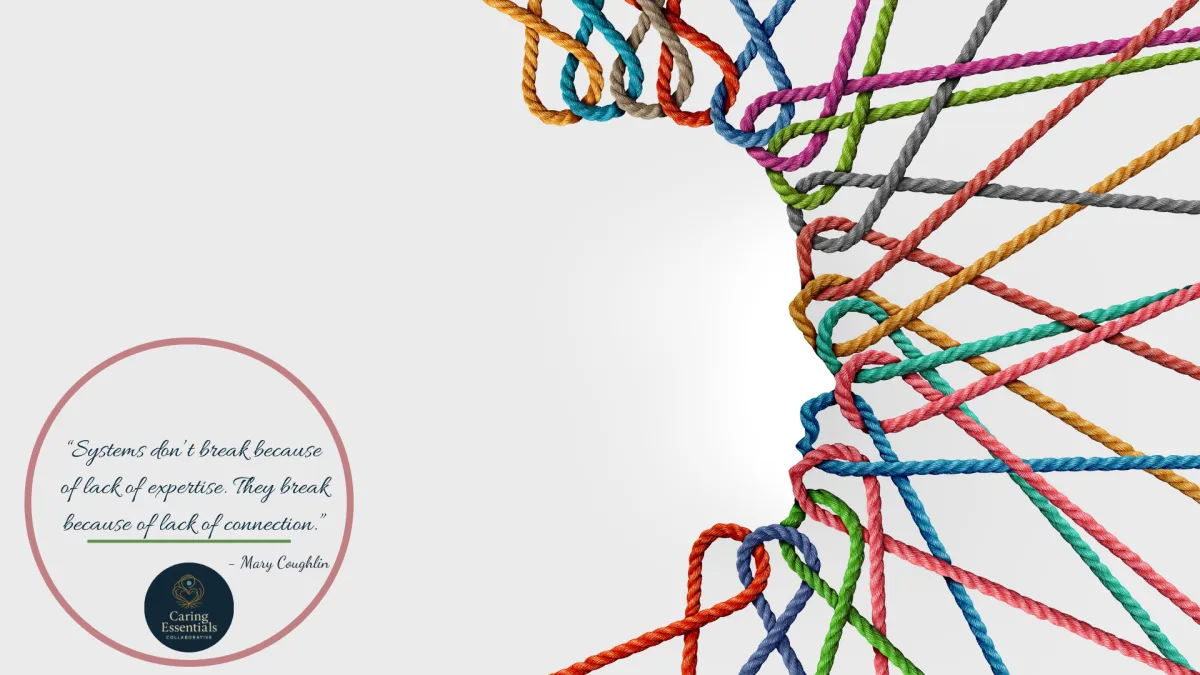
“Systems don’t break because of lack of expertise. They break because of lack of connection.” - Mary Coughlin
Love as a Systemic Force: Healing Society Through the NICU
Week 6 — The Cost of Disconnection
Disconnection is one of the most costly — and least discussed — wounds in healthcare. It shows up quietly at first: a rushed interaction, a team member who stops asking for help, a parent who feels they are “in the way,” a clinician who no longer recognizes their own exhaustion.
We call it burnout or moral injury or compassion fatigue, but beneath every one of those experiences is a nervous system that no longer feels safe, valued, or in relationship.
In the NICU, disconnection is not abstract — it shapes outcomes. A stressed clinician may miss subtle cues. An overwhelmed parent may struggle to bond. A baby’s fragile physiology can destabilize in the wake of chaos, noise, or emotional tension.
This is not because anyone is uncaring. It’s because we are human. And humans are wired for connection. When connection breaks, the whole system suffers.
Trauma-Informed Developmental Care shows us that safety, trust, collaboration, empowerment, and equity are not soft additions — they are the architecture of healthy development. Caring Science reminds us that love-based relationships are not optional if we want sustainable, ethical, healing-centered practice. Advocacy teaches us that if we want people to thrive, we must design systems that support belonging, not isolation.
The truth is:
Every policy that prioritizes efficiency over empathy weakens our collective health.
Every structure that silences voices erodes trust.
Every culture that dismisses emotion undervalues humanity.
But disconnection is not the end of the story. Connection — real, steady, relational connection — is the medicine. And it is measurable.
Belonging improves resilience. Psychological safety improves communication. Co-regulation improves decision-making and reduces error. Love improves everything.
Healthcare doesn’t need more speed. Healthcare needs more relationship. More presence. More spaces where people can breathe again, feel again, and remember why they came to this work in the first place.
When we restore connection, we are not simply improving morale. We are restoring health at every level: individual, team, family, and system. The NICU teaches us this every day. When a baby cannot regulate on their own, we regulate with them. When a parent feels overwhelmed, we anchor them with care. When a colleague is struggling, presence becomes advocacy.
Connection is the antidote to system failure. It is also the path forward — for the NICU and for society.
Reflection Prompt
Where do you notice disconnection — in yourself, your team, your system? What one small relational act could help restore connection this week?
Science | Soul | Skill
Science: Psychological safety, belonging, and co-regulation reduce cortisol, improve communication, and decrease adverse events — for clinicians and families alike.
Soul: Connection is not a luxury. It is the ground of healing.
Skill: Choose one interaction today and slow it down by 10%. Let your presence be the bridge. Healing begins there.
Until every system remembers how to love,
Mary