The Adults These Children Become: How Childhood Shapes Lifelong Mental Health
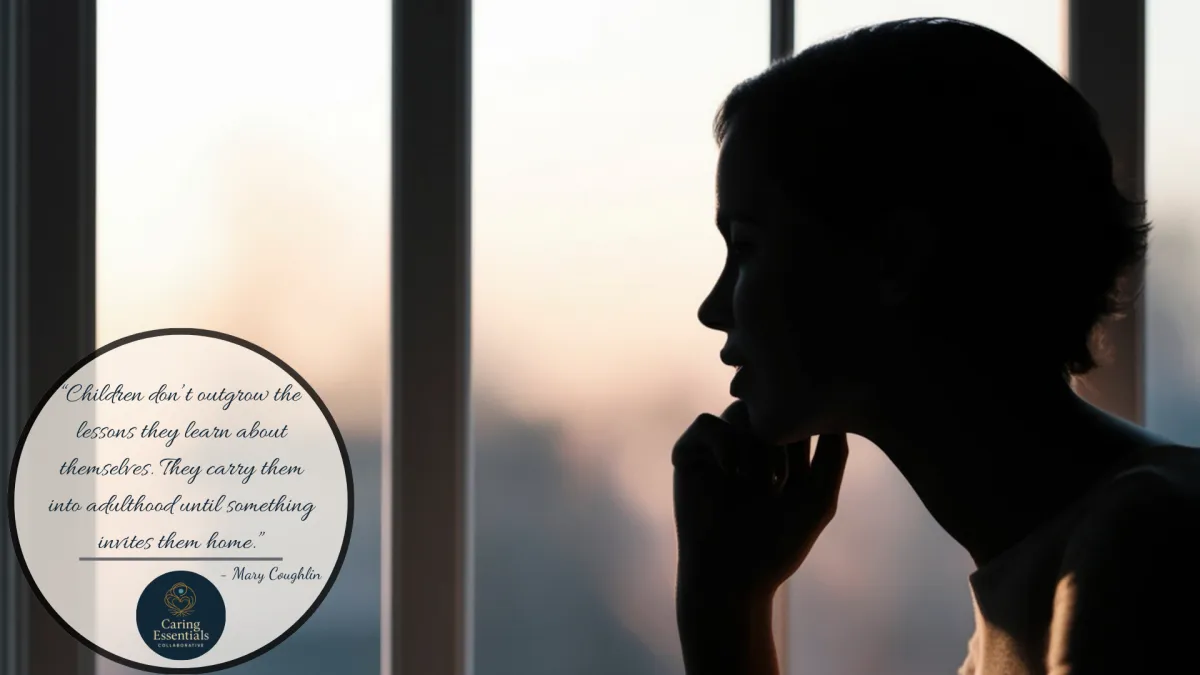
“Children don’t outgrow the lessons they learn about themselves. They carry them into adulthood until something invites them home.” - Mary Coughlin
Post #6 in the "Stop Pathologizing Being Human' Series
A reflection on what early misattunement leaves behind
Children do not outgrow the lessons they learn about themselves. They carry them forward quietly, faithfully into adulthood.
The child who learned to be “easy” becomes the adult who never asks for help. The child who learned to stay quiet becomes the adult who struggles to speak up. The child who learned to perform competence becomes the adult who lives in exhaustion. The child who learned to scan for danger becomes the adult who cannot rest. The child who learned that feelings were inconvenient becomes the adult who no longer trusts their own inner world.
These are not character flaws. They are adaptations. They were learned in environments where safety, attunement, or belonging were conditional and where being fully oneself carried risk.
And because these adaptations were often praised, they became invisible. We call these adults:
high-functioning
resilient
accomplished
reliable
strong
But inside, many are holding:
chronic anxiety
burnout
shame
numbness
perfectionism
a persistent sense of being “on”
or the quiet grief of never having been fully seen
This is the long shadow of childhood misinterpretation.
When early behaviors were labeled instead of understood…When sensitivity was corrected instead of protected…When regulation was demanded instead of supported…When belonging required shrinking…The nervous system learned one thing very well: Stay vigilant. Stay useful. Stay invisible if needed.
These patterns don’t disappear with age. They become embedded in work, relationships, leadership, parenting, caregiving and even in the helping professions themselves. Many clinicians, educators, and caregivers were once the children who learned to override their own needs to meet the expectations of others. Their competence is real. Their compassion is real. And so is their exhaustion.
This is why child mental health is not just about children. It is about the adults we are asking them to become.
A trauma-informed lens invites us to see adult struggles not as personal failures, but as unfinished survival stories — nervous systems that adapted brilliantly and then never had the chance to stand down.
Healing, then, is not about becoming someone new. It is about coming home to what was set aside. It is about relearning how to:
listen inward
trust the body’s signals
rest without guilt
set boundaries without fear
feel without collapsing
receive care without earning it
When adults are supported in this re-integration, something powerful happens. They parent differently. They lead differently. They teach differently. They care differently. Not because they’ve perfected themselves but because they’ve made room for their own humanity.
This is the quiet promise of reimagining child mental health: When we stop pathologizing children, we stop wounding adults before they even know they are wounded.
In the final reflection of this series, I’ll offer a clear, loving, unapologetic demand — not for better children, but for better systems, and a future worthy of those who will inherit it.
For now, I invite you to pause with this question: What did you learn, early on, about what parts of you were welcome — and which ones had to wait?
Until next time,
Mary