A Loving, Unapologetic Demand for Change in Child Mental Health
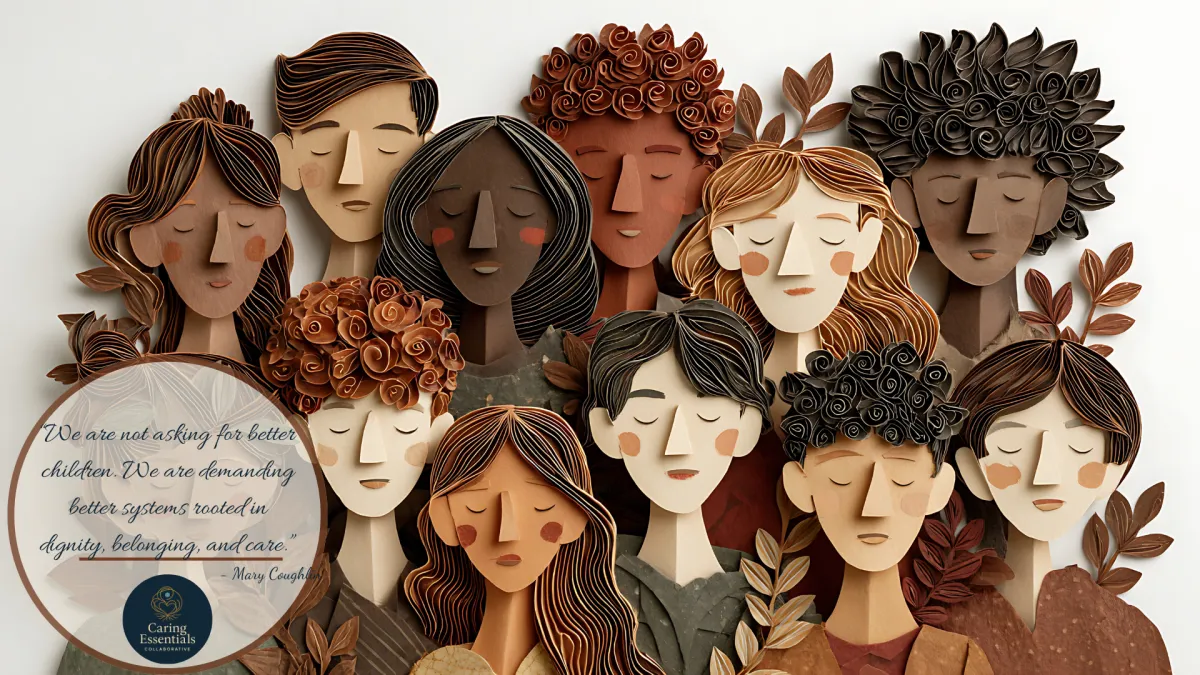
"We are not asking for better children. We are demanding better systems — rooted in dignity, belonging, and care." - Mary Coughlin
Post #7 in the "Stop Pathologizing Being Human" Series
A reflection on what children — and all of us — deserve
There comes a moment when reflection must turn into resolve.
After naming how we pathologize being human… After tracing the myth of normal… After witnessing how children learn to shrink to belong… After seeing difference mislabeled, survival diagnosed, and adaptations carried into adulthood…
What remains is not a question. It is a demand. Not shouted. Not punitive. Not shaming. But unmistakably clear.
We are not asking for better children. We are demanding better systems.
Systems that no longer confuse compliance with health. Systems that stop mistaking adaptation for pathology. Systems that widen their definition of “normal” until it can finally hold the full range of humanity.
This demand is not rooted in anger though anger would be justified. It is rooted in love. In grief.
In truth. In the quiet knowing that we can no longer afford to do harm in the name of help.
Let me say this plainly: Children are not broken. Families are not defective. Neurodiversity is not a flaw. Cultural ways of being are not deviations. Big feelings are not disorders. Survival responses are not moral failures.
What is failing are systems that were never designed with children’s nervous systems, cultures, histories, and relationships at the center.
So here is the demand.
We demand child mental health systems that begin with relationship, not regulation. We demand educational and clinical environments that adapt to children rather than forcing children to adapt to environments that harm them. We demand trauma-informed, culturally responsive, developmentally attuned care that understands behavior as communication and distress as a signal not a diagnosis waiting to happen. We demand support for parents, caregivers, educators, and clinicians not just expectations that they carry impossible loads alone. We demand training that includes nervous-system literacy, relational safety, cultural humility, and reflective practice not just protocols and checklists. We demand accountability for systems that continue to pathologize difference while claiming to promote well-being.
And we make this demand without dehumanizing anyone.
Because the truth is: Most people working within these systems were once children shaped by them.
They, too, learned to perform, to cope, to override, to endure. They, too, deserve repair.
This is not about blame. It is about responsibility.
Responsibility to tell the truth about what is not working. Responsibility to stop passing harm forward simply because it is familiar. Responsibility to choose courage over convenience.
Reimagining child mental health is not a niche issue. It is a societal one. Because when we protect children’s humanity, we protect the future of:
healthcare
education
leadership
democracy
community
care itself
This is the work of remembering that health is relational, that healing is collective, and that belonging is foundational, not optional.
So let this be our shared declaration: We will stop pathologizing being human. We will widen the frame of what is considered normal. We will build systems that are worthy of the children — and adults — who live within them.
Not someday. Now.
Because children are watching. And they are learning what we value not from what we say, but from what we are willing to change.
Until next time,
Mary